Ayanna L. Wilcox
ePortfolio

Stage 1: Taking in light, converting it into chemical energy
Below, you will discover the elements that were the start of my change, my photosynthesis. Because I have experienced these things, I was well prepared for Stage 2 of my photosynthesis. I started to form roots firmly planted into rich traditions, beliefs, and wisdom that will carry me throughout my undegraduate matriculation.


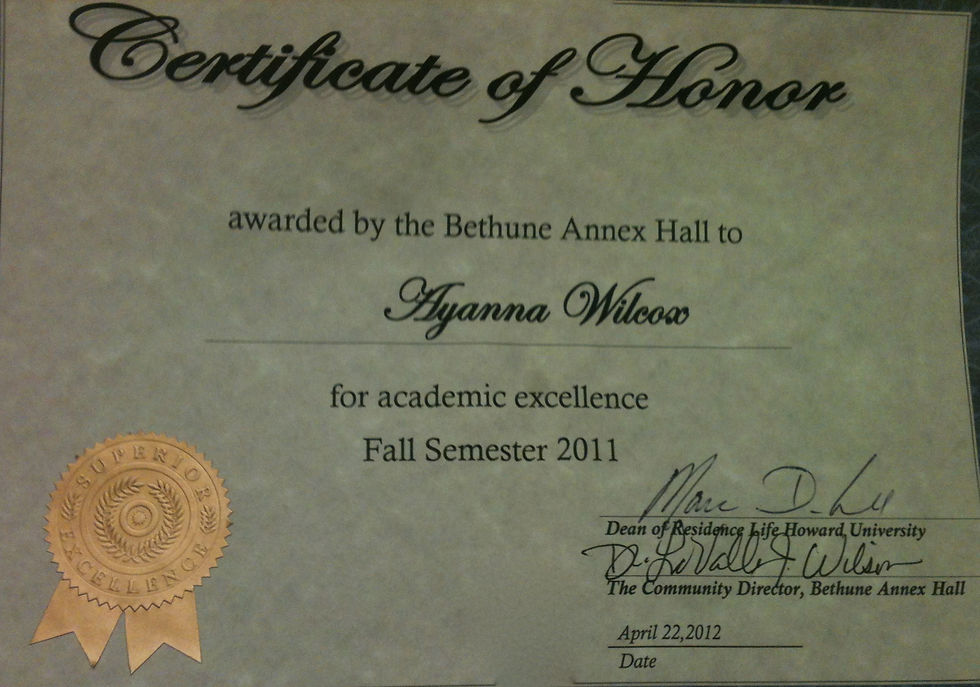
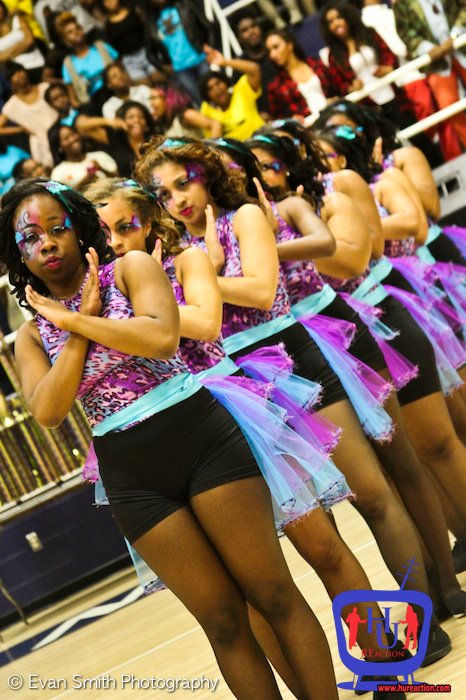
Coming to Howard University
Coming to Howard
Coming to Howard, I was not unfamiliar of the rich history and legacy I was adopting . I would've never thought I'd be influenced postively. My ways of thinking, performing, and believing have matured. During my matriculation, I have been forced to creatively & critically think, perfect my oral communication skills, and form an understanding of the political, economic, and cultural development of society and how they correlate with their historical regional, national, and global contexts.
Re-educated


Africans of the Diaspora
While preparing to become a leader of my own community, I had to understand the interculutral differences that exists amongst my people. I was able to discover the different belief systems and cultures of Africans and Africans of the Diaspora through my readings of Conversations with Ogotemmeli and Of Water and the Spirit. The biography and autobigoraphy, respectively, gave readers such as myself, insight to what our ancestors believed before and after we were conquered as a nation. The two novels are proof that traditions and culture live within the people, regardless of where the people are in the world.
In addition, I had the opportunity to explore the differences between two communities that exist amogst African-American people - The Nation of Islam and the African Hebrew Israelites. The two communities differ in their beliefs of "who's people are we." Achebe (1958) says through one of his characters in his novel, Things Fall Apart, "there is no story that is not true, [...] The world has no end, and what is good among one people is an abomination with others" (p. 51).
Yet,these two communities were formed by understanding that we are truly Africans of the diaspora. My research on both communities, the Dogon people discussed in Conversations with Ogotemmeli and the Dagara people discussed in Of Water and the Spirit can be found under the gallery of photos.


Then vs. Now
In the words of Wells (1892), “an innocent man has been barbarously and shockingly put to death in the glare of the 19th century civilization, by those who pro- fess to believe in Christianity, law and order” (p. 92). Ida B. Wells was famously recognized for spear-heading anti-lynching campaigns. During my undergraduate experience, I had the opportunity to analyze her pamphlet The Red Record. In my literary analysis I discussed how lynching is still prevalent today. Unknowingly, I foreshadowed the killing of Troy Davis and Trayvon Martin, Civil-rights activists have claimed the killings of theese 2 Black men are certainly examples of modern-day lynching.
History:
Repeated & Relearned
How do I sound?
Studying Communication & Culture, I have experienced the dismissal of the importance of my field from my peers. Understanding the correlation between communication and culture is extremely important and very much significant to almost any field I can imagine. From my understanding, sociolinguistics, the study of the relationship between language and society, is a branch that falls under the large umbrella of Communication & Culture.
While studying the language issues, we studied the formation of pidgin and creole languages and the differences between the two. During the course, I could not help but think of the Gullah people of South Carolina and the Geechee people of Georgia who have created their own pidgin language and are fighting to preserve it as generations move fro the area.
There are individuals who do not know the difference between using dialect and lacking education. This issue is addressed in Joan Wynne's article "We Don't Talk Right. You Ask Him." Wynne (2003) states, "no one had taught me that the language I had grown up loving was used to bludgeon others into submission and feelings of inferiority" (p. 120). I further discussed my sentiments about this article in a reaction paper.